How to Cool a Room With No Vents (From a Knoxville Builder)
Updated
Key Takeaways
-
Without vents, you might be fighting trapped heat in a space that is a dead end. The quickest relief can come from opening interior doors, setting up fans and turning off heat sources like old bulbs and idle electronics.
-
Any real air conditioner, whether it is a portable AC, a ductless mini split or a through-wall unit, has to dump heat somewhere outside the room. There is no magic AC without vents that can cool a whole space.
-
It's a good idea to work in order: cut heat sources first, move air with doors and fans, then invest in permanent cooling if the room is used daily. A ductless mini split will cost about $2,500 to $5,500 to get installed in the Knoxville area for a single zone.
-
Air quality and safety can be as important as temperature. Rooms with no windows will trap humidity and pollutants when there is no airflow, and using one as a bedroom may trigger code requirements for egress and ventilation.
What "No Vents" Really Means When You're Trying to Cool a Room
How to cool a room with no vents is a question I hear all the time in the houses I work on across Knoxville, Farragut, Maryville and Oak Ridge. "No vents" usually means one of a few things: a bonus room over the garage that never got a supply register, a finished basement tied into a system that is too small, interior offices buried deep in the floor plan with no duct runs, or a converted garage or sunroom the builder left off the main HVAC completely. Sometimes there is a supply vent but no return vents, so cool air blows in but has nowhere to go. Other times the room is completely off the central air conditioning system. There is no supply, no return, nothing.
I did a garage conversion in Maryville where you might think a box fan would be enough to get through the summer. By July the room was sitting 10°F hotter than the kitchen, and no amount of fan speed was changing that. This article walks through practical ways to cool a room with no vents, from "I need to sleep this evening" all the way to "I'm ready to install a ductless mini split." I'm writing as a builder, not a manufacturer, so the focus is on what actually works and what it costs.
Quick Ways to Cool a Room With No Vents
-
Open the door. A bedroom or office with no vent that stays closed becomes a small enclosed room that traps heat like an oven. Propping the door open lets cooler hallway air from other rooms flow in, assuming the rest of the house has air conditioning running.
-
Set up a fan. You can place one fan low in the doorway pointing into the hot room. Even a cheap box fan pointed right can move enough air to drop the temperature you feel quickly. Using a fan increases evaporation from your skin, so you can feel several degrees cooler.
-
Kill heat sources. Switch off lights you are not using, shut down gaming PCs and big monitors, and avoid running appliances that throw more heat into the space.
-
Personal cooling tricks. A small desk fan pointed at you, a ceiling fan set to spin the other way for summer, a thin cotton sheet instead of heavy blankets. Using natural fibers for bedding can improve comfort during hot weather. Ice or frozen water bottles placed in front of a fan can create a small cooling effect in one spot, too.
Why Rooms With No Vents Get Hot
Main heat sources:
-
People and electronics. A gaming desktop can push 300+ watts of heat into a small room. Big TVs, laser printers and even phone chargers all add to the heat.
-
Sun-facing and attic-adjacent walls. Does a window facing west or a ceiling below a 150°F attic push heat straight into the space? High humidity can make air feel warmer and stickier even when the air temperature isn't extreme.
-
No forced air circulation. Without a supply vent or return, the central air conditioner can't "see" the load. Hot air is gathering at the ceiling and staying there. The room becomes a dead-end where warm air has nowhere to go.
Try Fans and Airflow Before Buying Equipment
-
Doorway airflow. You can place a box fan in the doorway blowing hot air out into a cooler hallway. You can set a second fan in the hall pushing cool air back toward the room. Pulling warm air out of a room this way can create a cross-breeze effect that copies cross ventilation even in a room without windows.
-
Ceiling fans. They are set to spin the other way in summer at higher speed. Ceiling fans can make a room feel 4–6 degrees cooler by moving air across your skin, though they don't lower the actual air temperature.
Cutting Heat From Lighting, Electronics and Hidden Sources
-
Lighting. LED bulbs waste less energy as heat compared to old-style bulbs. Four old 60-watt bulbs in a room with no windows throw as much heat as a small space heater. You can swap them for LEDs and you'll notice the difference the same day.
-
Electronics. A compact laptop draws 30–60 watts. A gaming desktop with monitors can hit 300+. Running appliances that generate heat can raise room temperature a lot. Move heavy gear to a space with better vents if you can.
Portable Cooling Options for a Room With No Vents
Portable AC units need an exhaust path to cool effectively. They pull heat from room air with a refrigerant circuit and dump it through an exhaust hose to the outdoors. Pointing that hose into a closet or the same room won't cool anything. You'll just add heat from the compressor motor.
Realistic exhaust path options when there's no ceiling vent: through an exterior wall with a proper grille, through a window kit or through a modified door panel leading to a garage or outside porch.
Dual-hose models are more efficient than single-hose because they don't pull pressure down in the room and draw warm air in through cracks. For most bonus rooms that are 200–450 sq. ft., you need 10,000–14,000 BTU depending on how high the ceiling is and how much sun hits the room. Unit costs run $400–$1,200.
Permanent AC Options Without Vents Like Ductless Mini Splits
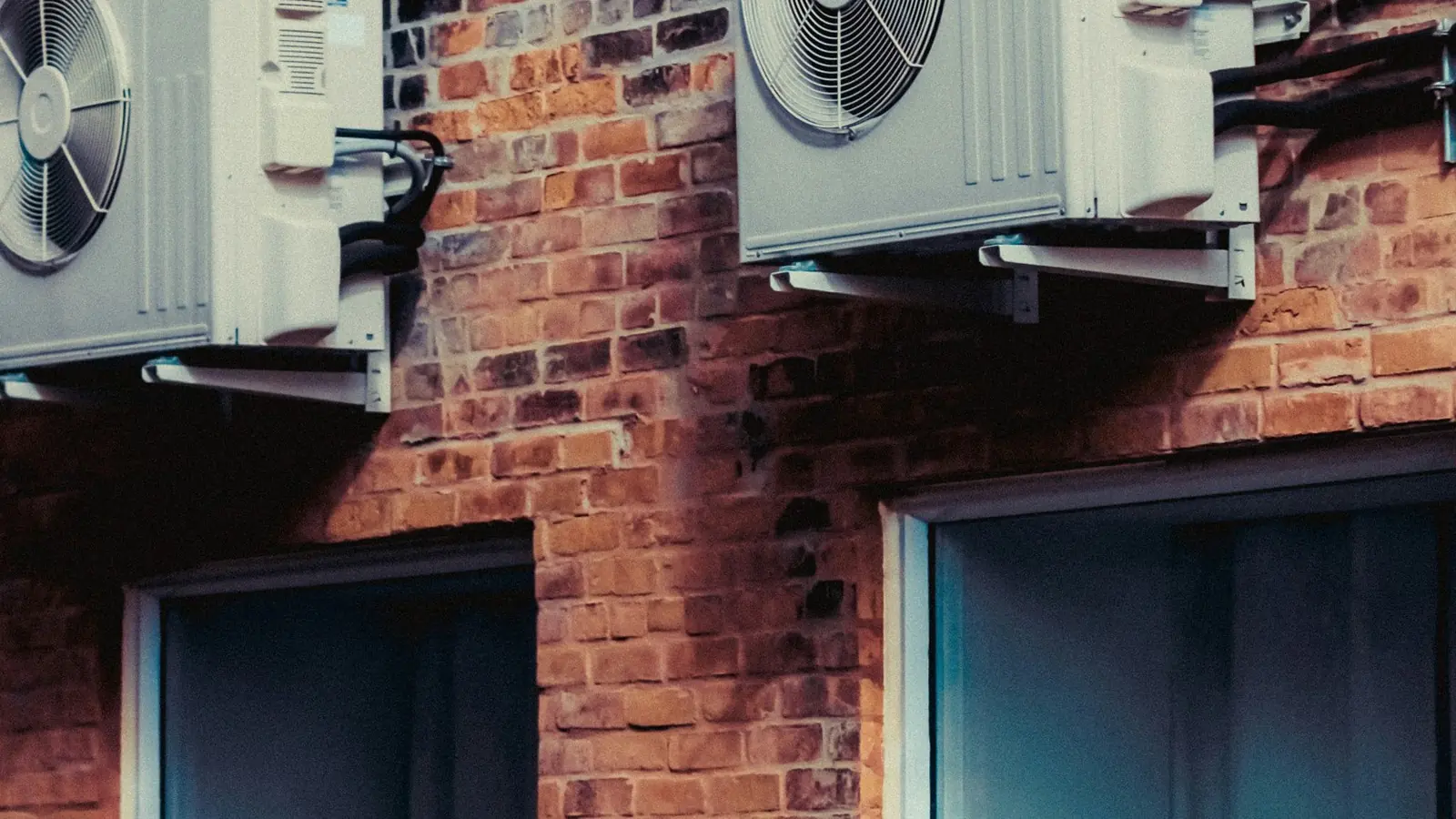
Ductless mini-split systems connect indoor and outdoor units with a small line set that passes through the wall. The indoor unit is mounted high on an exterior wall, the outdoor condenser sits on a pad outside, and refrigerant lines run between them. They have both cooling and efficient heating without connecting to existing ducts. In my Knoxville-area projects, a single-zone system usually installs for $2,500–$5,500 depending on size, electrical work and wall penetrations. TVA's EnergyRight plan currently offers an $800 rebate on qualifying 17+ SEER2 units.
-
Through-the-wall AC units are designed for rooms with no windows. They install permanently in an exterior wall and work like a window AC without a window.
-
Extending existing ductwork can work if the main system has spare capacity, but typical duct energy loss runs 20–30%, so a ductless mini is often more efficient.
Hire a pro for drilling through brick or structural walls, running new circuits and checking that outdoor unit locations meet local building codes.
When to Add a Return, Exhaust Fan or Ductwork
-
Return air fixes. You can install a transfer grille above the door, cut in a jump-duct to the hallway, or leave a larger gap at the bottom of interior doors. These let the central system circulate air through the room instead of building up pressure in it.
-
Exhaust fans. Exhaust fans can actively remove hot air from rooms with no windows. A bathroom-style exhaust fan through the ceiling or an exterior wall pulls warm, stale air out. This is a solid cooling option for small home offices and workshops.
-
Extending ductwork. When the central system has enough capacity, adding a new supply register and return can be the cleanest solution, but it requires load calculations, code checks and sometimes duct resizing. This is installation work best left to a licensed HVAC tech.
For single- or two-family homes in Knox County, HVAC changes alone usually don't trigger stormwater or grading permits. But bigger remodels, like building a full addition for a new bonus room, that disturb more than about an acre or change natural ventilation and drainage patterns start running into local stormwater rules and plan review fees ($50 for residential projects valued up to $75,000).
Air Quality and Safety in Unvented Rooms
Keeping a room comfortable isn't just about temperature. Stale air, moisture and egress are real safety issues in unvented rooms around Knoxville.
Most residential air conditioning systems, including a ductless mini split, cool and recirculate indoor air. They don't automatically bring in fresh air or outdoor air. Without open doors or dedicated ventilation, CO₂ and odors build up. Indoor CO₂ should stay below 1,000 ppm for safety. In a sealed room with one or two people, you can exceed that in a few hours.
Moisture concerns. High humidity encourages mold and mildew growth, especially in windowless basements. Exhaust fans can remove humid air from windowless rooms. Dehumidifying a room can improve comfort in humid conditions. A dehumidifier keeps humidity between 40–50%, which is the sweet spot. Proper ventilation reduces the risk of mold in enclosed spaces.
Code. Bedrooms generally need an emergency egress route. Using a room with no windows as a full-time bedroom can be a code violation. The City of Knoxville treats anything that changes appearance, layout or function as an alteration, not a simple repair, which can affect permits.
Electrical load. Adding a 12,000 BTU portable AC or ductless mini to an older Knoxville home from the 1960s–1980s may need checking that existing circuits and the main panel can handle the extra amps. Don't skip this step.
How I Cool Common "No Vent" Spaces Room by Room
Interior home office. Start with LED lighting, a doorway fan setup and moving heavy electronics to another room. For year-round daily use, a ductless mini split or properly vented portable AC is usually worth the energy savings and comfort.
Finished basement with no vents. Dehumidification comes first to keep air quality safe. Then decide between extending ductwork (if access and capacity allow) or adding a ductless mini based on whether you can reach an exterior wall for the unit.
Converted garage or bonus room over a garage. These spaces get crushed by roof radiant heat and poor insulation. Air sealing and insulation upgrades come before any cooling equipment. Then size a ductless mini split to the actual square footage and roof exposure, not just the floor area.
Small interior storage or hobby room. With a doorway fan, small exhaust fan and LED lights, you can usually handle it. These rooms rarely justify a full air conditioner unless you're working in them for long stretches in summer. Create good air flow to the hallway and you're fine.
What to Do Next in the Knoxville Area
-
Tonight: Open interior doors and set up fans so you can get immediate relief.
-
This weekend: Swap to LEDs, move obvious heat sources to another room, and hang curtains on hot walls.
-
This month: Price out a vented portable AC versus a ductless mini split if the room is used daily.
Call a local builder or HVAC pro if you're cutting new wall penetrations, adding ductwork or installing a ductless mini that needs a new 240-volt circuit. In Knox County and the City of Knoxville, altering walls or adding a permanently installed air conditioner may count as an alteration rather than a repair, which can affect permits.
If you're planning a remodel, addition or garage conversion in the Knoxville area, get professional help to size cooling options correctly and keep the project in code. It costs a lot less to plan it right than to fix a room that's still hot after you've already spent the money.
FAQ About Cooling a Room With No Vents
Should I Extend My Ductwork Into the Hot Room?
Sometimes, but only if the existing system has enough capacity and the duct system can be balanced properly. Have a Manual J load calculation done before connecting to a trunk line. In my work, once a system is already struggling to cool the main floor, I recommend a ductless mini split for the problem room instead of putting too much load on the central air conditioner.
Can I Sleep in a Room With No Vents?
Many people do, but your safety depends on more than temperature. You need enough fresh air (indoor CO₂ should stay below 1,000 ppm), safe electrical setups, and for true bedrooms, an emergency egress path under local codes. A properly vented portable AC or ductless mini split cools the room but doesn't add fresh outdoor air automatically. Keep interior doors open or add a transfer grille so you can get natural ventilation.
Do I Need a Ductless Mini Split or Just Fans?
Look at usage. Daily work-from-home offices, primary bedrooms and finished basements usually justify a ductless mini split. Occasional hobby rooms rarely do. A simple test: if the room stays more than 7–10°F warmer than the rest of the house after trying fans, open doors and cutting heat sources, a dedicated cooling option is worth pricing. Once a room becomes primary living space, a mini split is usually the most comfortable and energy-efficient long-term solution.